Silver-quail
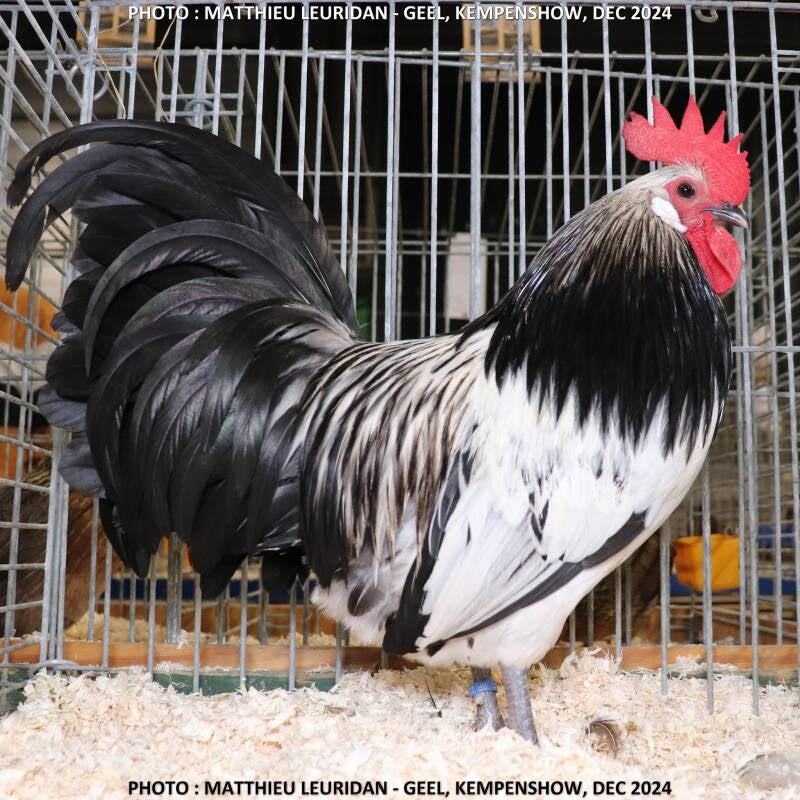
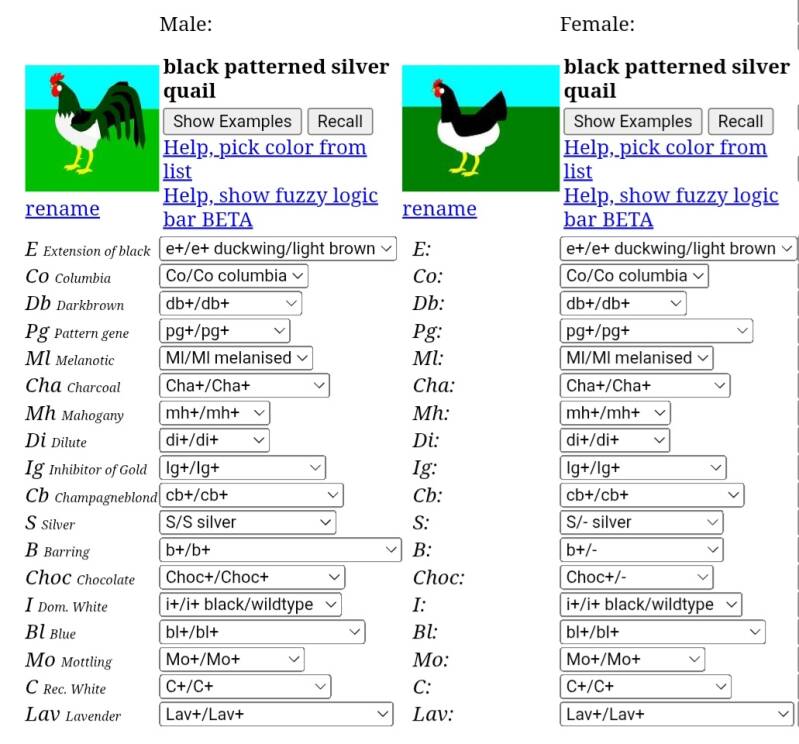
Color and pattern male
Head: glossy black ground-color, very narrow edged with silvery-white.
Neck: large feathers of the hackle entirely velvet-black, sheen increases towards the back; smaller feathers, higher in the hackle towards the throat, velvet-black with a very narrow silvery-white edge and shaft.
Shoulders and back: each feather has a green-glossy black triangular center with silvery-white barbs; back-feathers with silvery-white shaft; back-feathers broad under the hackle, become narrower on the back and longer on the lower back.
Saddle: hackle black with broad silvery-white barbs and shaft.
Tail: steering-feathers black; sickles green-glossy black; greater-coverts glossy black, lesser-coverts green-glossy black with silvery-white edging.
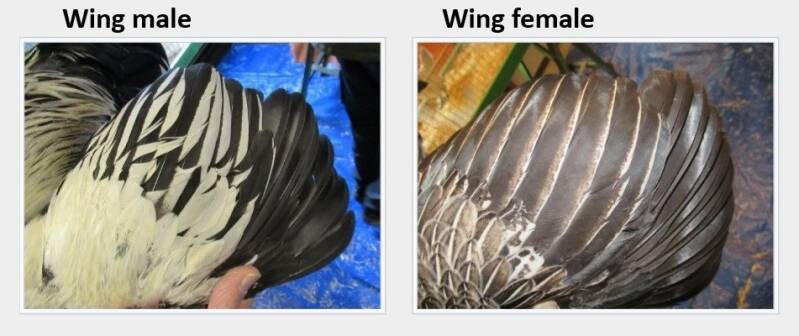
Wings: bow-feathers black with a narrow silvery-white edging; greater-coverts silvery-white with a glossy black spangle at the tip of the feather, forming a black wing-bar.
Primariy-flights: black.
Secondary-flights: inner-vane black; outer-vane mostly silvery-white, tip of the feather black, wing-triangle is formed when the wing is closed.
Breast and front of neck: overall silvery-white.
Thighs: similar to the breast.
Belly: slightly darker than the breast.
Rear-part: light-greyish.
Down: grey.
Serious faults
Deviant pattern on the neck-hackle. Black pattern on the breast. Yellow tinge in the silvery-white feather-areas. Lack of pattern on the secondary-flights.
Faults
The above serious faults occur to a lesser extent.
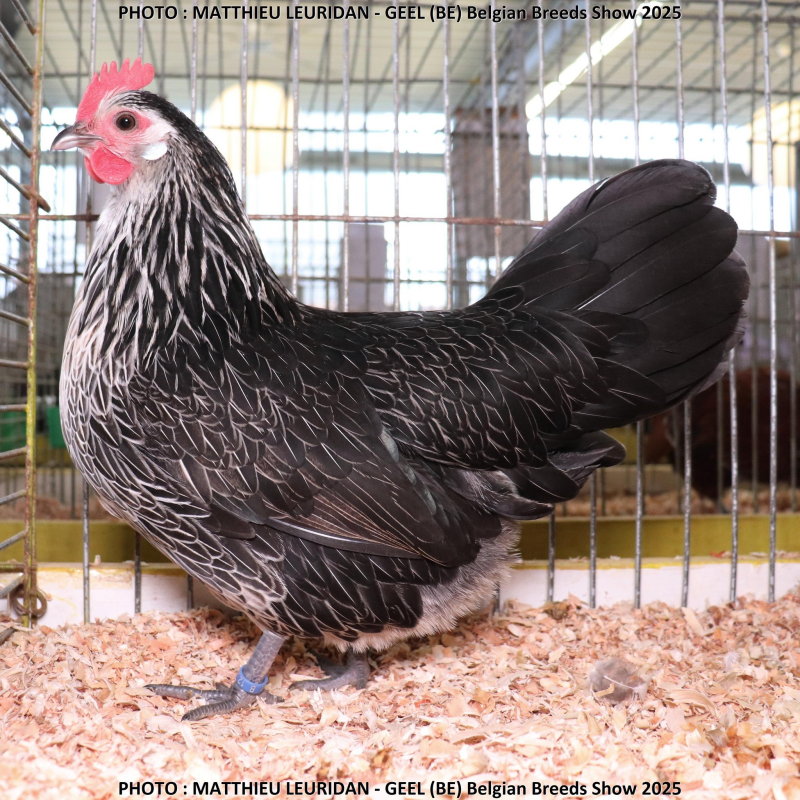
Color and pattern female
Head: black, very narrow edged with silvery-white.
Neck: hackle feathers velvety-black with a narrow, silvery-white edging that widens slightly towards the throat; the lower edge of the hackle is almost entirely black.
Shoulders, back, and saddle: very dark grey with a velvety-black sheen, with a narrow silvery-white edging and brilliant silvery-white shaft, the edging narrows towards the saddle.
Tail: black steering-feathers; very dark-grey coverts with silvery-white edging and shaft; dark-grey support-feathers with silvery-white edging and shaft.
Wings: coverts similar to the back; edging broadens towards the wing-flights.
Primary-flights: black.
Secondary-flights: inner-vane dark-grey; outer-vane very dark-grey with a narrow, not sharply defined silvery-white at the edge, tip of the feather black.
Front of neck, breast, belly and thighs: silvery-white; feathers on the sides of the breast, towards the wings and rear-part, very grey with silvery-white edging and shaft.
Rear-part: light grey.
Down: grey.
Serious faults
Deviant pattern on the neck-hackle. Black pattern on the breast. Yellow tinge in the silvery-white feather-areas. Lack of pattern in the secondary-flights. Too little, too narrow, or too broad silvery-white lacing on the back, saddle, tail, and wing-coverts, or too broad silvery-white shaft. Too much white on the wings.
Faults
The above serious faults occur in minor degrees.
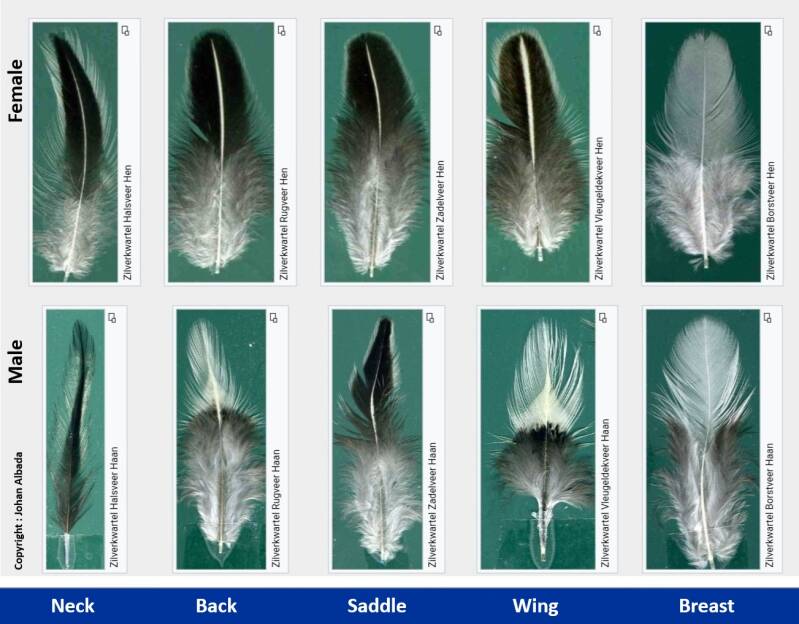
Feather details from: http://www.kippenencyclopedie.nl
Website from Johan Albada with more than
5000 photos of chickens, chicken color varieties and feathers.
Genetic code: https://kippenjungle.nl/Overzicht.htm
Website from Henk Meijers with all available information regarding chicken genetics including the world famous
Chicken Color Calculator
Create Your Own Website With JouwWeb