Red barred

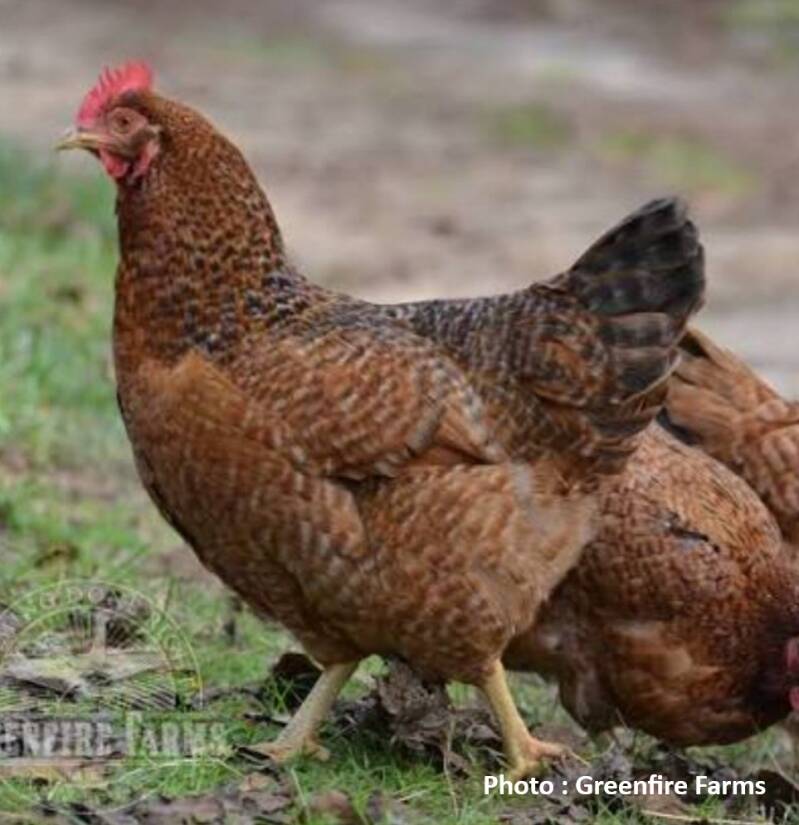
Color and pattern male and female
Red ground-color; each feather regular, parallel and sharply defined light-red transverse bars, as straight as possible and must not tend toward an inverted V-shape; veins are free of light coloring.
The red bars and the light-red bars of the male are of equal width, the red bars of the female are wider, making her appear darker than the male.
The number of bars should be proportionate to the length of the feather, and they should extend along its entire length. Each feather has a red tip. The overlapping feathers give the bird an overall reddish appearance.
The barring pattern must be as uniform as possible across the entire plumage
Not only the surface plumage is barred but also the red down, albeit less sharply defined and less intense in color-depth.
Down also red barred but less sharply defined and less intense in color-depth.
Serious faults
Insufficient barring. Bars not running straight across the feather. Red bars that are too pale. Presence of entire red or partial red feathers. White or too black in the visible plumage. Lack of harmonious color uniformity across the entire plumage. Insufficient barring in the down.
Faults
Serious faults to a lesser degree. Visible black peppering in the tail.
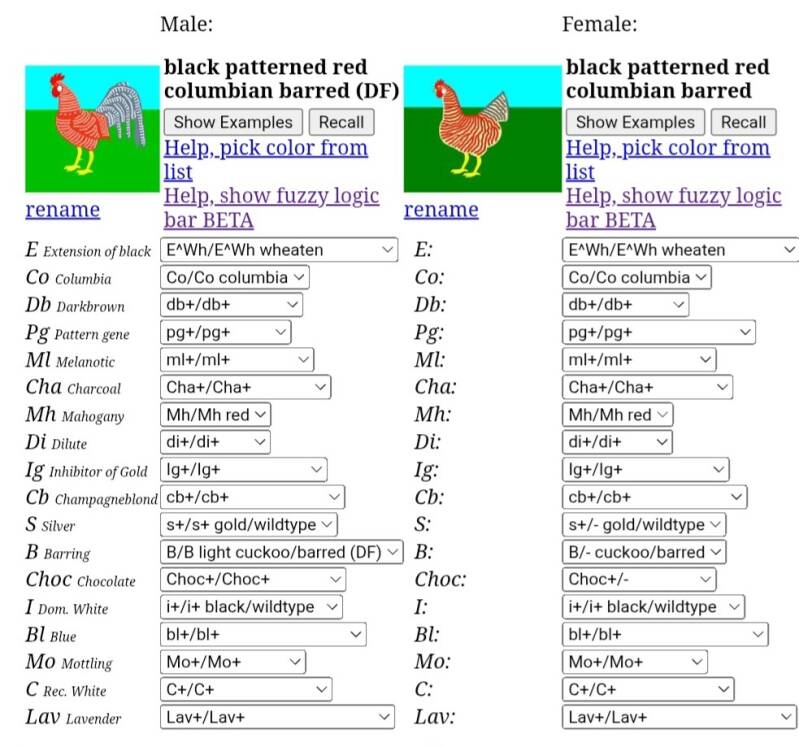
Genetic code: https://kippenjungle.nl/Overzicht.htm
Website from Henk Meijers with all available information regarding chicken genetics including the world famous
Chicken Color Calculator
Create Your Own Website With JouwWeb