Silver mille-fleur
Note
As the chickens of the millefleur color varieties age, the amount of white in the pattern will increase. Two-year-old chickens generally have the best pattern distribution.
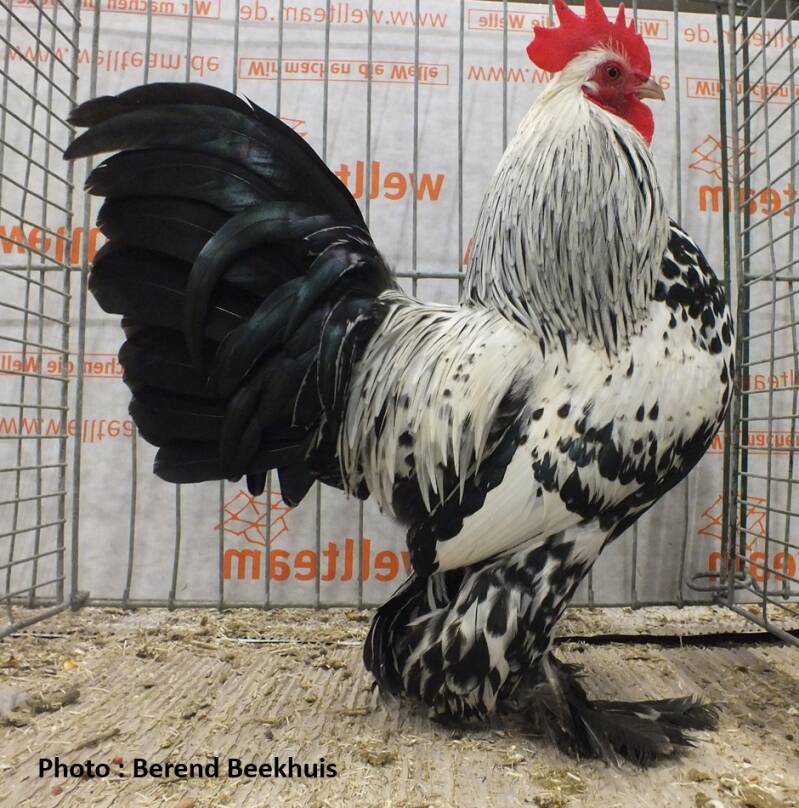
Color and pattern male
Head: silvery-white.
Neck: hackle silvery-white; each feather ends with a green-glossy black spangle with a diamond-shaped pure white mottle and a silvery-white ornamental fringe on the sides; front of the neck similar to the breast.
Back and shoulders: silvery-white, each feather with a diamond-shaped, green-glossy black spangle and a tiny white mottle at the tip.
Saddle-hackle: similar to the neck-hackle, the shaft-stripe as well as the mottle are less noticeable because the feathers ends thinner than those of the neck-hackle.
Tail: steering-feathers black, each feather with a white mottle at the tip; sickles and coverts green-glossy black with a tiny white almost V-shaped mottle at the tip.
Wings: bow almost black; wing-arch silvery-white, sparsely with tiny white mottles; greater-coverts silvery-white, each feather ending in a large, almost round, green-glossy black spangle with a almost V-shaped white mottle, forming a clear black and white wing-bar when the wing is closed.
Primary-flights: inner-vane black, outer-vane black with a narrow white lace and a white mottle at the tip.
Secondary-flights: outer-vane silvery-white, inner-vane dull black widening at the end to the-outer vane connecting to the white mottle.
Breast: silvery-white, each feather ends in a large, almost round, green-glossy black spangle with a V-shaped white mottle.
Belly, thighs, leg- and foot-feathering: approximately similar to the breast.
Down: grey.
Serious faults
Too strong development of the spangles on the breast. Coarse or too few white mottles. Complete vague blurry pattern. Too much white in leg-and foot-feathering.
Faults
Shaft-stripes on the neck-hackle. Slightly too much white in over-aged chickens.
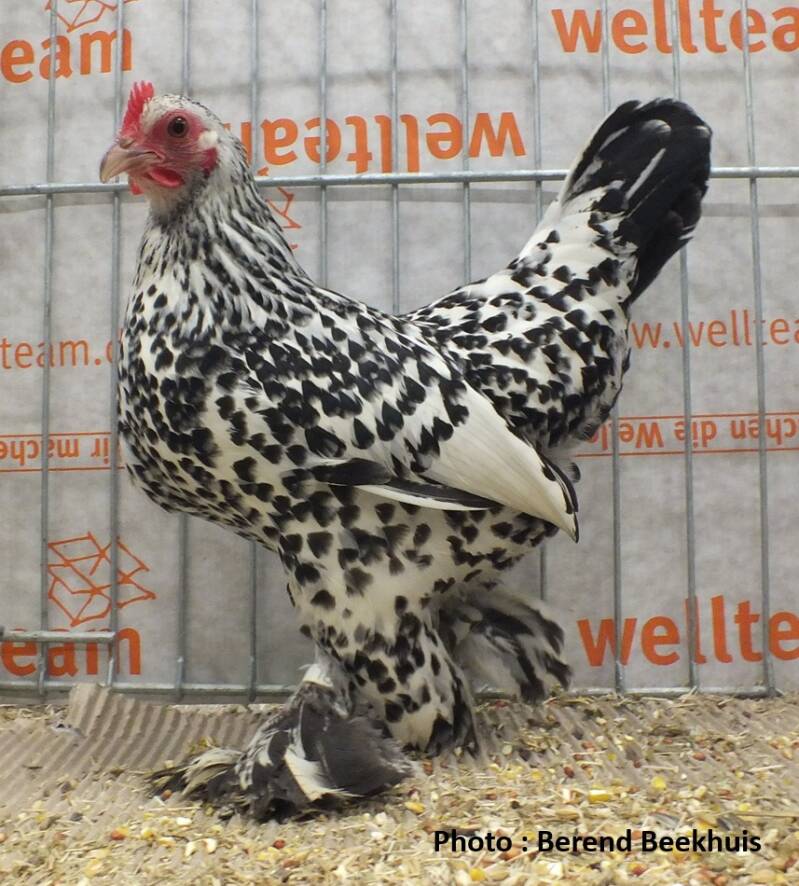
Color and pattern female
Head and neck: silvery-white, each feather ends with a green-glossy black spangle with a diamond-shaped pure white mottle; front of the neck similar to the breast.
Back, shoulders, breast, bow, wing-coverts and saddle-cushion: silvery-white, each feather ends in a large, almost round, green-glossy black spangle with a V-shaped white mottle.
Tail: steering-feathers dull black, with a diamond-shaped pure white spangle; coverts similar to the back; the upper ones with a slightly longer black spangle.
Primary-flights: inner-vane black, outer-vane slightly silvery-white laced , lower end of the feathers white laced.
Secondary-flights: outer-vane silvery-white, inner-vane dull black widening at the end to the-outer vane connecting to the white mottle.
Belly, thighs, rear-end, leg- and foot-feathering : approximately similar to the breast.
Down: grey.
Serious faults
Too few spangles on the breast. Coarse or too few white mottles. Complete vague blurry pattern. Too much white in leg- and foot-feathering.
Faults
Shaft stripe pattern on the neck-hackle. Slightly too much white in over-aged and older chickens.
Feather details from: http://www.kippenencyclopedie.nl
Website from Johan Albada with more than:
5000 photos of chicken-breeds, chicken color varieties and feathers.
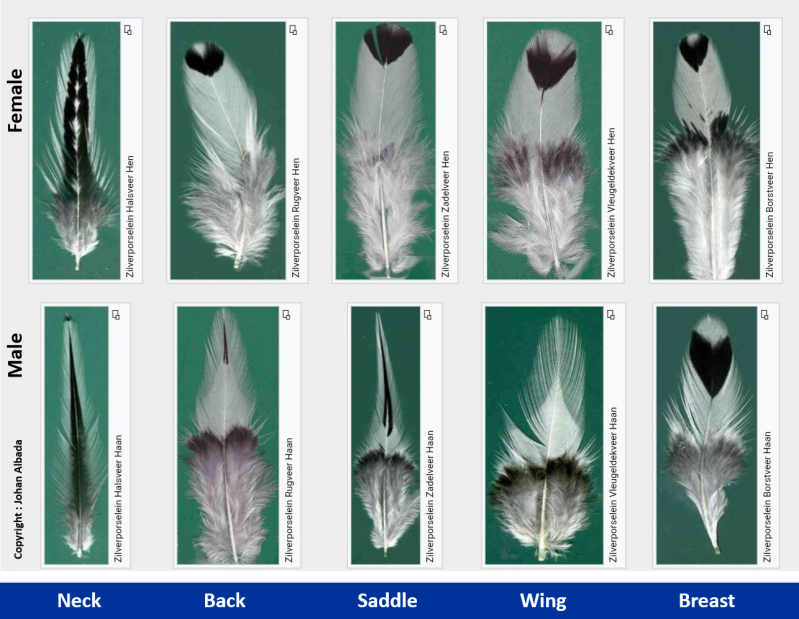
Genetic code: https://kippenjungle.nl/Overzicht.htm
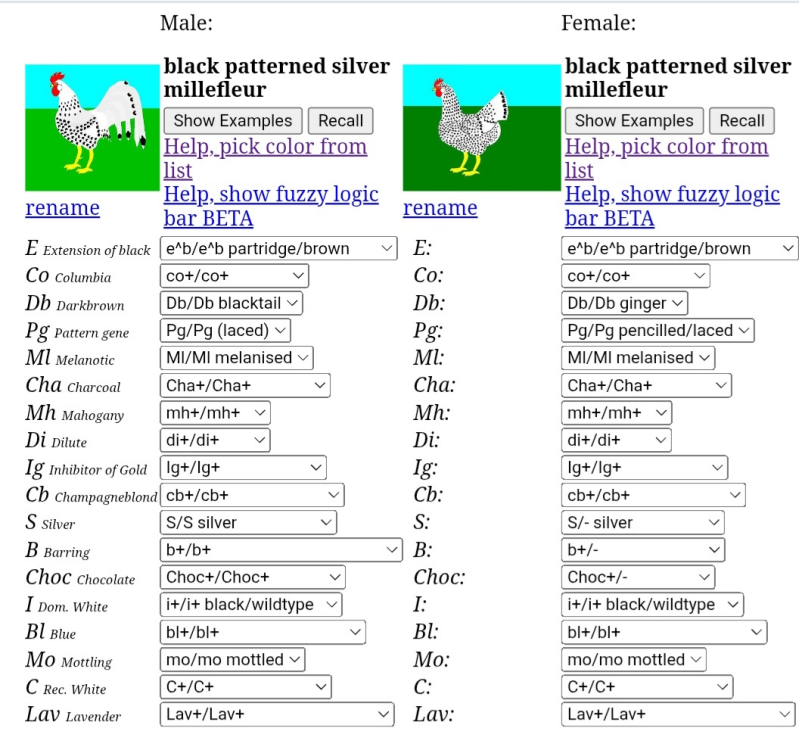
Website from Henk Meijers with all available information regarding chicken genetics including the world famous
Chicken Color Calculator
Create Your Own Website With JouwWeb