Buff bluetail
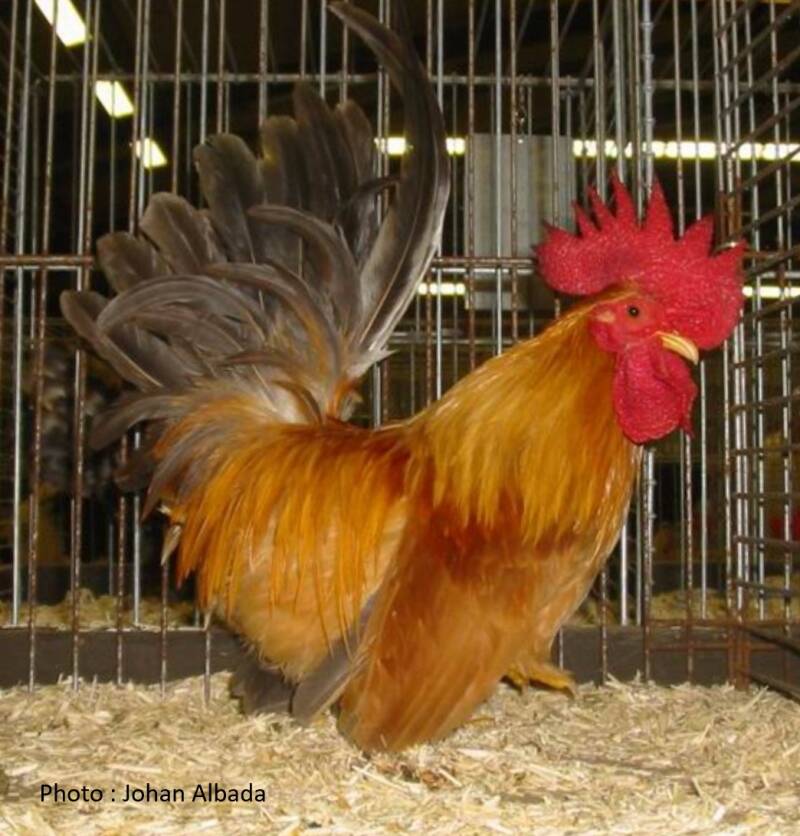
Color of the male
Plumage: uniformly warm golden yellow, except for the bright blue pattern on the primary- and secondary-flights and the bright blue tail feathers; a few small blue feather tips are permitted at the lower neck-hackle, but they should not degenerate into a greater black tip.
Primary-flights: bright blue with a uniformly warm golden yellow edge, which should be sharp and not too broad.
Secondary-flights: bright blue with a broad, uniformly warm golden yellow edge on the inner vane; the outer vane is a uniformly warm golden yellow, so that when the wing is closed, it is almost entirely a uniformly warm golden yellow.
Tail: steering-feathers bright blue, sickles bright blue with evenly warm golden-yellow edging and light shafts; in contrast, most males have such a wide warm golden-yellow edging on the shorter sickles that they are predominantly golden-yellow.
Down: light salmon or gray, however a gray down color should not penetrate the upper color.
Serious faults
Golden-yellow patches on the tail steering- feathers. Absence of blue on the wing-flights. Blue feather tips at the lower neck-hackle or a distinct striped pattern. Uneven, much too light or too dark color. White in any part of the plumage.
Faults
Slightly too much golden-yellow in the large sickles. Insufficient pattern on the wing-flights. Slightly uneven color. Slightly too light or slightly too dark in color.
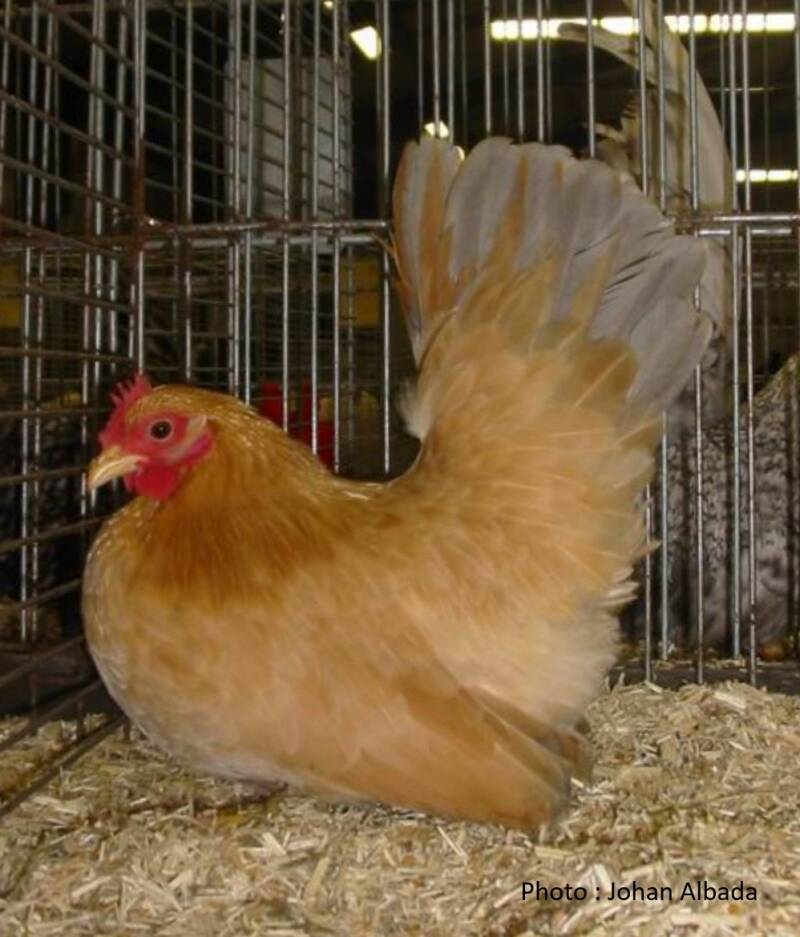
Color of the female
Plumage: uniformly warm golden yellow, except for the bright blue tail steering-feathers; the pattern on the wing-flights are similar to those of the male. A few small blue feather tips, which must not degenerate into a greater blue feather tip, are permitted at the lower neck-hackle.
Primary-flights: bright blue with a uniformly warm golden yellow edge, which should be sharp and not too broad.
Secondary-flights: bright blue with a broad, uniformly warm golden yellow edge on the inner vane; the outer vane is a uniformly warm golden yellow, so that when the wing is closed, it is almost entirely a uniformly warm golden yellow.
Tail: steering-feathers bright blue, sickles bright blue with evenly warm golden-yellow edging and light shafts; in contrast, most males have such a wide warm golden-yellow edging on the shorter sickles that they are predominantly golden-yellow.
Down: light salmon or gray, however a gray down color should not penetrate the upper color.
Note
The male is generally a darker yellow than the female.
Serious faults
Golden-yellow patches in the tail coverts. Absence of blue in the wing-flights. Blue feather tips at the lower neck-hackle or a distinct striped pattern. Uneven, much too light or too dark color. White in any part of the plumage.
Faults
Too broad golden yellow edging on the tail steering-feathers. Insufficient pattern on the wing-flights. Slightly uneven color. Slightly too light or slightly too dark color.
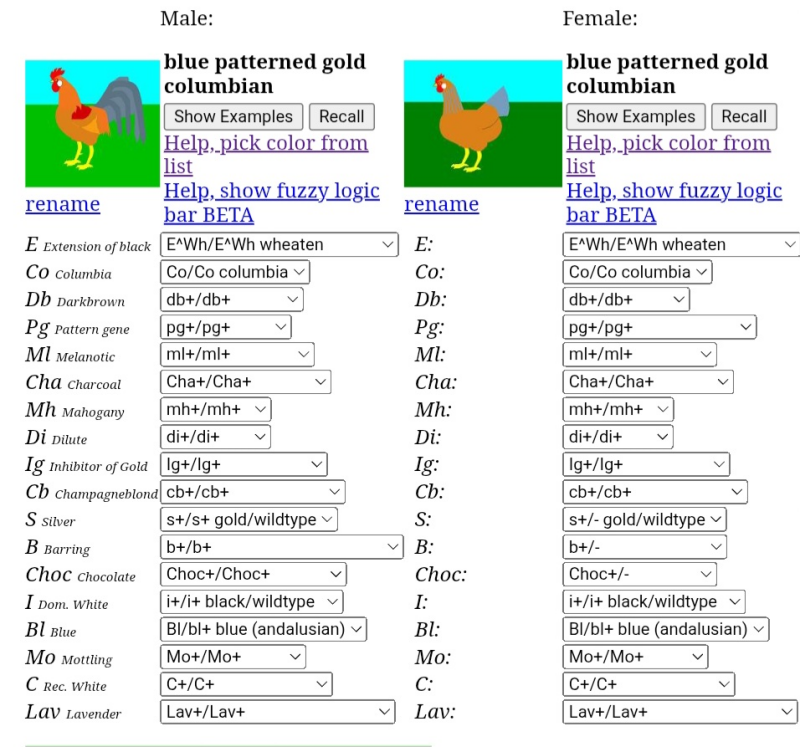
Genetic code: https://kippenjungle.nl/Overzicht.htm
Website with all available information regarding chicken genetics including the chicken color calculator.
Create Your Own Website With JouwWeb